Bringing Restaurant-Quality Meals to Your Workplace.
The Future is Frozen
2/26/20262 min read
Workplaces across North America increasingly turn to innovative food solutions to meet employee demands for convenience and quality. Frozen vending machines represent a growing trend, delivering restaurant-quality meals directly to offices and facilities with remarkable efficiency. As remote monitoring and advanced refrigeration technology advance, these machines offer pre-packaged frozen entrees, salads, and desserts that rival takeout options in taste and variety.
The frozen vending machine market demonstrates strong momentum. Valued at approximately $2 billion in 2025, the global sector projects a compound annual growth rate (CAGR) of 8 percent through 2033, potentially reaching $3.8 billion. Another analysis pegs the market at $0.5 billion in 2024, expanding to $1.2 billion by 2034 at a CAGR of 8.5 percent. This expansion stems from consumer preferences for grab-and-go frozen foods, particularly in high-traffic locations like offices where quick access trumps traditional cafeterias.
Traditional worksite foods often fall short nutritionally. A U.S. study found that 23.4 percent of working adults obtain foods at work weekly, averaging 1,292 kilocalories per person, dominated by high-sodium, high-sugar items like pizza, soft drinks, cookies, and candy. Healthy Eating Index scores highlight deficiencies in whole grains and fruits, with excess empty calories and refined grains. Frozen vending counters this by stocking balanced meals such as pre-portioned pasta, stir-fries, and grain bowls, prepared with restaurant techniques like flash-freezing to preserve texture and flavor.
Technology enables restaurant-quality delivery. Precise temperature controls maintain -18°C internals, preventing thawing cycles that degrade food. Touchscreens guide selections, displaying calorie counts and ingredients. Contactless payments dominate, with 82 percent of North American vending transactions now cashless. Remote inventory systems alert operators to restock bestsellers, ensuring uptime exceeds 95 percent.
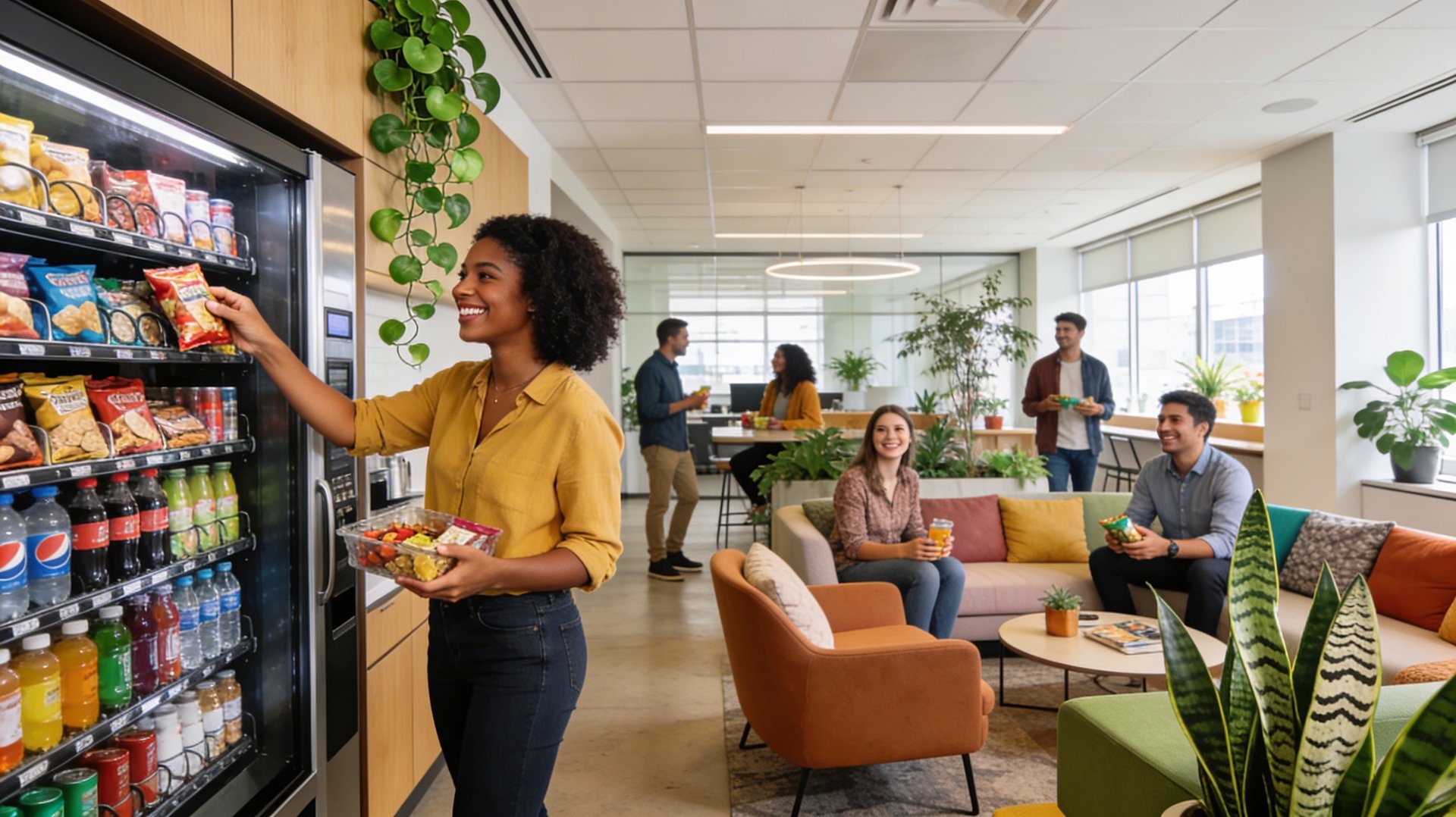
Corporate adoption accelerates. Offices deploy frozen units in breakrooms, reporting 20 percent boosts in employee satisfaction and productivity. Tech campuses integrate them into lounges, offering low-sugar alternatives and plant-based meals that align with wellness programs. Urban millennials and Gen Z, who favor automated retail, drive 68 to 74 percent of demand in metros. These demographics prioritize “snackification,” replacing full meals with portions from vending, up 17 percent since 2020.
Market projections underscore viability. One forecast sees $2.5 billion by 2025 at 12 percent CAGR, expanding to ice cream, yogurt, meals, and cocktails. Another anticipates $15 billion by 2030 from $8 billion in 2023 at 8.5 percent CAGR. Drivers include IoT for predictive maintenance and cloud analytics revealing sales patterns.
Workplace integration varies by size. Large Vancouver-style offices with 100-plus employees benefit most, generating $15-20 daily per square foot. Smaller Surrey facilities pair frozen units with standard vending for hybrid appeal. Half of U.S. working adults access vending at work, 30 percent cafeterias, making sites prime for upgrades.
Challenges persist but solutions emerge. High initial investments yield to efficiency gains; operational costs drop via smart tech. Cold chain management ensures safety, with sensors preventing spoilage. Energy fluctuations addressed by efficient models.
Consumer behavior fuels growth. Canadians cook frozen foods several times weekly (35 percent), with the category valued at $120 million, up 6 percent yearly. Multi-serve meals grew 2 percent in units since 2020, motivated by ease. Millennials favor “easy to prepare” options, adding healthy family meals.
Future innovations promise more. AI personalizes recommendations based on past buys. Sustainability features like recyclable packaging appeal to eco-conscious workers. Integration with delivery apps allows hybrid stocking.
For decision-makers, frozen vending shifts worksite nutrition. It reduces reliance on unhealthy free foods (70 percent of work calories). Offers affordable alternatives to $15 lunches. Supports hybrid work with 24/7 access.
As markets project billions in growth, frozen vending positions workplaces ahead. With 12 percent CAGRs in segments, restaurant-quality frozen meals become standard, improving diets amid 1,292 kcal weekly work intakes.
Adopting now leverages trends. Statistics confirm viability: 8-12 percent growth, $2-15 billion projections, 20 percent satisfaction gains. Workplaces evolve from snack dispensers to meal providers, future-proofing employee wellness.